The AI & ML Revolution: Why It Matters More Than Ever in 2025
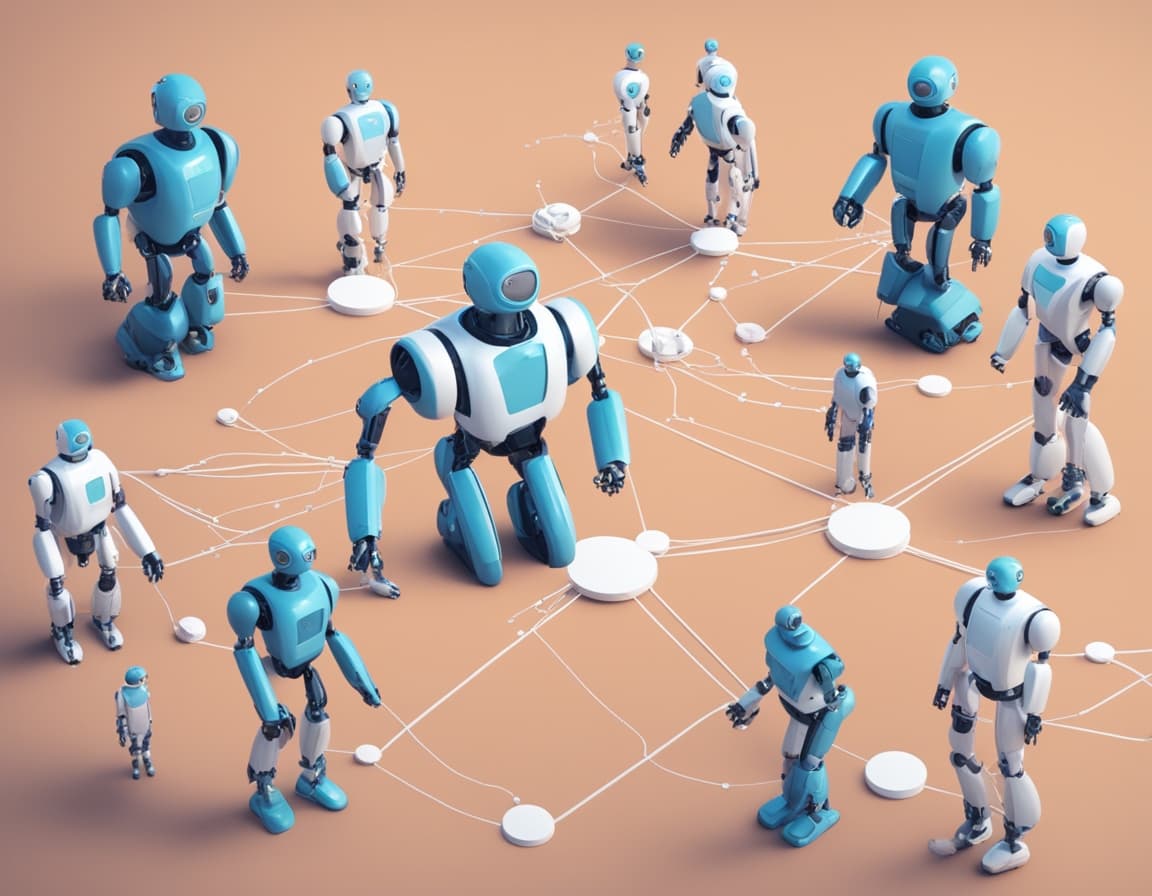
The AI & ML Revolution: Why It Matters More Than Ever in 2025
💻 Workophile Insights: Navigating the AI & ML Landscape
Artificial Intelligence (AI) and Machine Learning (ML) are more than just industry buzzwords; they are the driving force behind the most significant technological transformation of our time. From revolutionizing healthcare to reshaping financial markets and education, the impact of AIML is profound and accelerating. If you're a student, professional, or entrepreneur, understanding and embracing these technologies is no longer optional—it's absolutely essential for staying relevant and achieving success in 2025 and beyond.
🚀 Overview: The Present & Future of AIML
AI and ML are fundamentally changing how we approach problem-solving, interact with digital systems, and foster innovation across all sectors. These aren't futuristic concepts; they are fully integrated into our daily lives, from personalized recommendations on streaming platforms to sophisticated fraud detection in banking. The rapid advancements in algorithms, computing power, and data availability have propelled AIML from theoretical concepts to practical, indispensable tools.
✨ Why AI & Machine Learning Are Indispensable Today
The benefits of integrating AI and ML are manifold, offering unparalleled advantages:
- 📊 Unprecedented Efficiency & Automation: AI and ML algorithms excel at automating repetitive tasks, significantly reducing human error and boosting overall productivity across enterprises.
- 📈 Data-Driven Decision Making: Leveraging advanced analytical capabilities, AIML processes vast amounts of data at speeds and scales impossible for humans, enabling smarter, more informed strategic decisions.
- 🧬 Accelerated Innovation & Discovery: From speeding up drug discovery in pharmaceuticals to optimizing material science, AI and ML are drastically accelerating research and development cycles.
- 🎯 Hyper-Personalization: These technologies power highly customized experiences in e-commerce, education, and entertainment, tailoring content and services to individual user preferences.
- 🌍 Real-World Problem Solving: AIML is at the forefront of tackling complex global challenges, including climate prediction, optimizing urban planning, and developing intelligent transportation systems.
🏭 Industry Transformations Driven by AIML in 2025
The pervasive influence of AI and ML is reshaping nearly every industry:
- 🏥 Healthcare: AI is transforming diagnostics (e.g., early disease detection from medical imaging), personalizing treatment plans, and dramatically accelerating drug discovery processes.
- 💰 Finance: Enhanced fraud detection systems, intelligent robo-advisors, and high-frequency trading platforms are making financial services more secure and efficient.
- 🛍️ Retail & E-commerce: AI predicts consumer behavior, optimizes supply chain logistics, and delivers highly personalized shopping experiences and product recommendations.
- 🏗️ Manufacturing: Predictive maintenance, automated quality control, and intelligent robotics are revolutionizing factory floors, improving precision and output.
- 🎓 Education: Adaptive learning platforms, AI-powered tutoring systems, and automated grading are creating more personalized and effective educational experiences for students worldwide.
- 🚗 Automotive: Autonomous vehicles, predictive maintenance for cars, and intelligent traffic management systems are becoming increasingly sophisticated thanks to AI.
👩💻 Essential Future Skills to Thrive in an AI-Powered World
As AI and ML continue to redefine the future of work, certain skills are becoming paramount for professionals across all domains:
- 🧠 Human-AI Interaction: The ability to effectively collaborate with AI systems, understanding their capabilities and limitations.
- 🤖 Prompt Engineering: Mastering the art of crafting precise and effective prompts to get the best output from generative AI models.
- ⚖️ AI Ethics & Governance: A critical understanding of the ethical implications of AI, ensuring responsible and fair development and deployment.
- 📊 Data Science & Advanced Analytics: Proficiency in collecting, cleaning, analyzing, and interpreting large datasets to extract valuable insights.
- 💬 Critical Thinking & Creativity: Uniquely human skills that become even more valuable in a world where routine tasks are automated by AI.
- Lifelong Learning & Adaptability: The continuous pursuit of new knowledge and the flexibility to adapt to rapidly evolving technological landscapes.
🧪 Mini ML Demo – Python Example (Linear Regression)
To illustrate the fundamental concept of Machine Learning, here's a simple Python example using scikit-learn for Linear Regression. This model learns a linear relationship between input features and a target variable, demonstrating ML's core strength: learning from data to make predictions.
import numpy as np
from sklearn.linear_model import LinearRegression

# Sample Data: X = features (e.g., hours studied), y = target (e.g., exam score)
# Let's say we have data points: (1 hour, 2 score), (2 hours, 4 score), etc.
X = np.array([[1], [2], [3], [4], [5]])
y = np.array([2, 4, 5, 4, 5])

# Create and train the Linear Regression model
# The model 'learns' the best fit line through the data points
model = LinearRegression()
model.fit(X, y)

# Make a prediction for a new data point (e.g., if someone studied for 6 hours)
new_X = np.array([[6]])
prediction = model.predict(new_X)

# Print the predicted outcome
print(f"Predicted exam score for 6 hours of study: {prediction[0]:.2f}")
🔍 This simple example showcases how Machine Learning models can learn patterns from historical data to make informed predictions about future outcomes—a cornerstone of ML's immense power.
The Road Ahead: Embracing the AIML Future
The AI and ML revolution is not just a technological shift; it's a societal transformation. By understanding its implications, acquiring relevant skills, and embracing responsible innovation, individuals and organizations can not only adapt but thrive in this exciting new era. The time to engage with AI and ML is now.
About Workophile Insights: Workophile Insights provides cutting-edge analysis and practical guides on the latest technological trends, helping professionals and businesses navigate the evolving digital landscape.
About the Author
Workophile Insights
A passionate writer and expert in technology, sharing insights to help you build a smarter career.